Coppercraft Distillery · Holland, Michigan · E-commerce & customer acquisition
Turning a craft distillery's product advantage into measurable online sales.
Coppercraft had the products, reputation and physical customer experience. The challenge was translating that advantage into an online buying journey that could attract new customers, navigate alcohol advertising restrictions and reliably measure purchases.
Echelon rebuilt the acquisition journey, connected purchase tracking across domains and tested different product messages to identify what actually converted.
Visit Coppercraft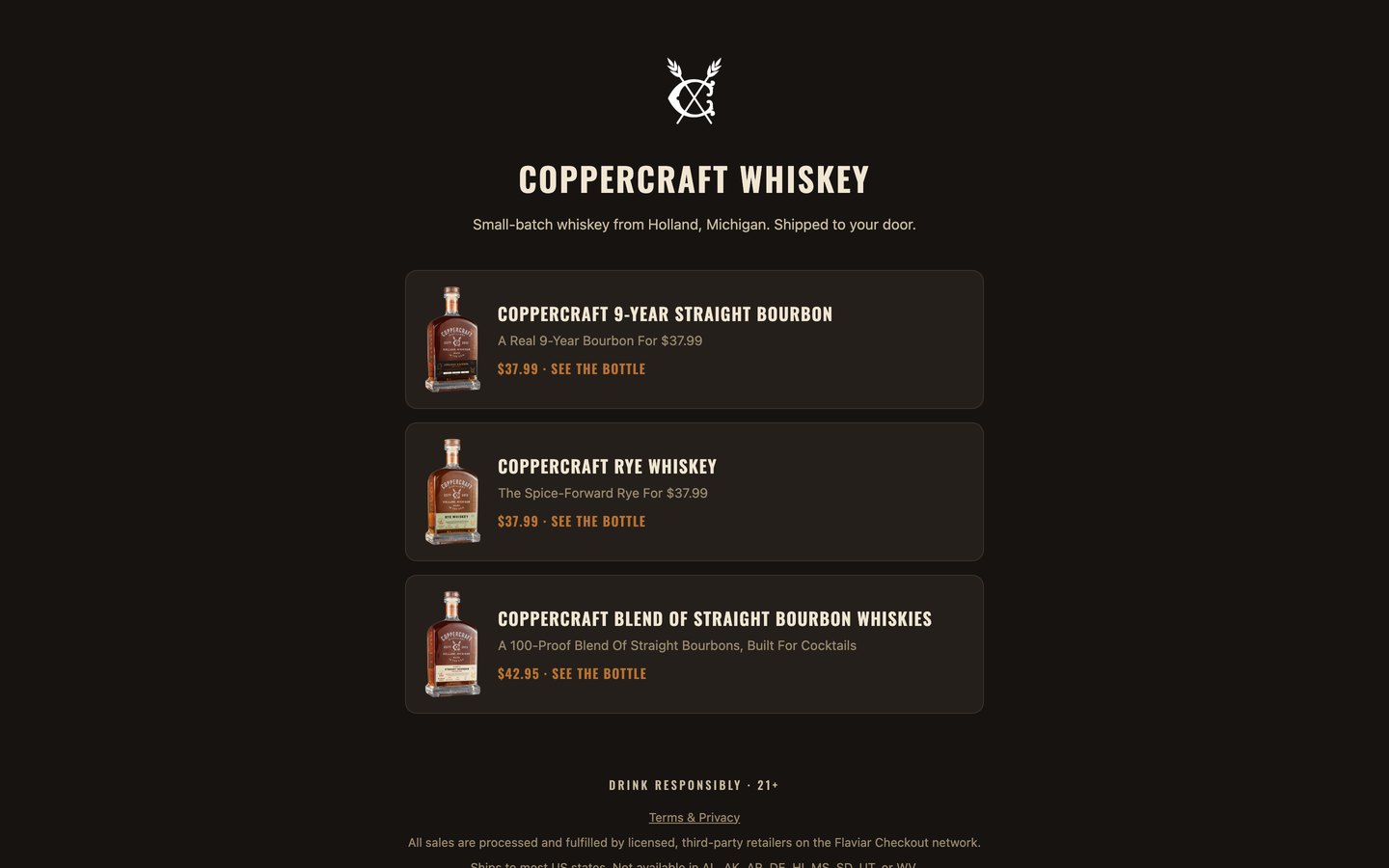
1,000+
Meta-attributed orders
~$18
Average cost per Meta-attributed order
3.3×
Meta-reported return on ad spend
62%
Share of purchases from the winning creative angle, first 30-day review
Lifetime advertising results reported through Meta Ads Manager as of 10 September 2026. Attribution-based results are not equivalent to independently verified incremental sales.
The situation
A strong product. A complicated path to purchase.
Coppercraft Distillery was founded in 2012 in Holland, Michigan, producing craft bourbon and rye whiskey alongside its physical tasting room experience.
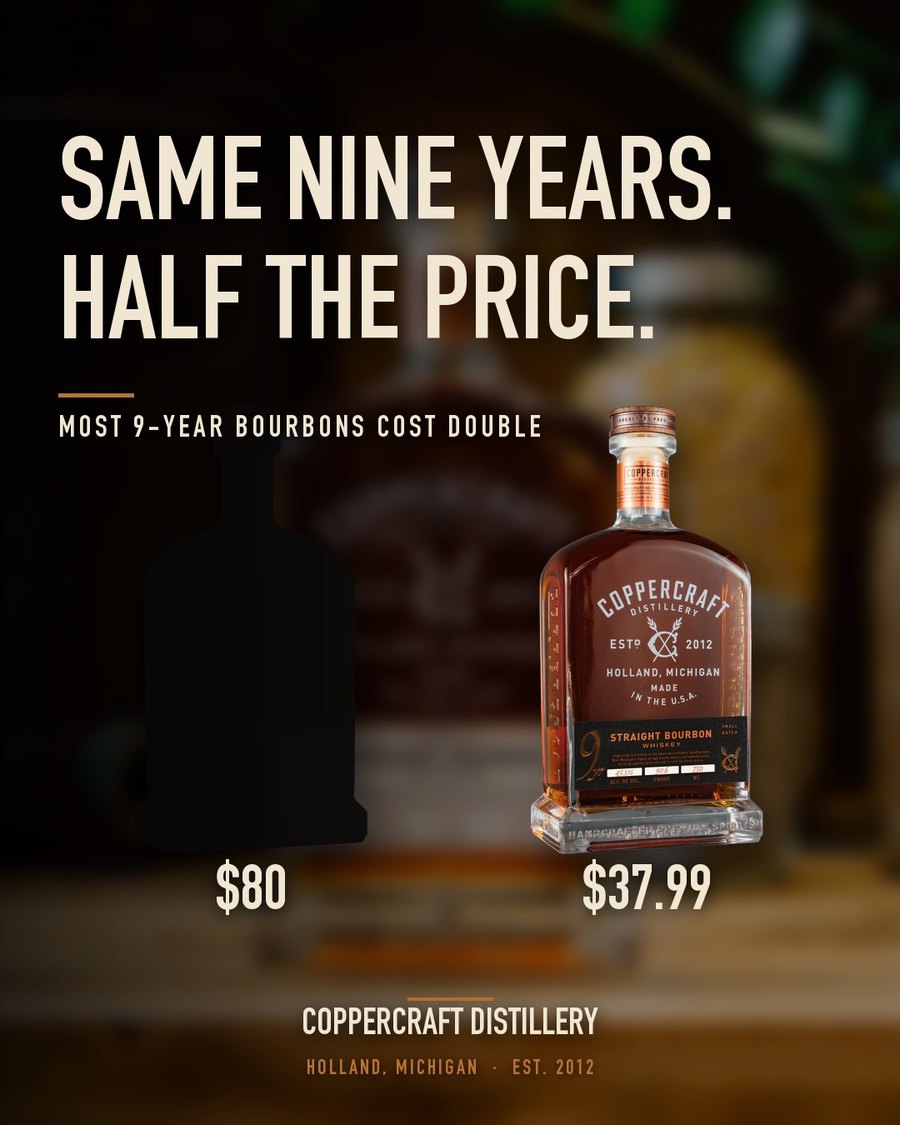
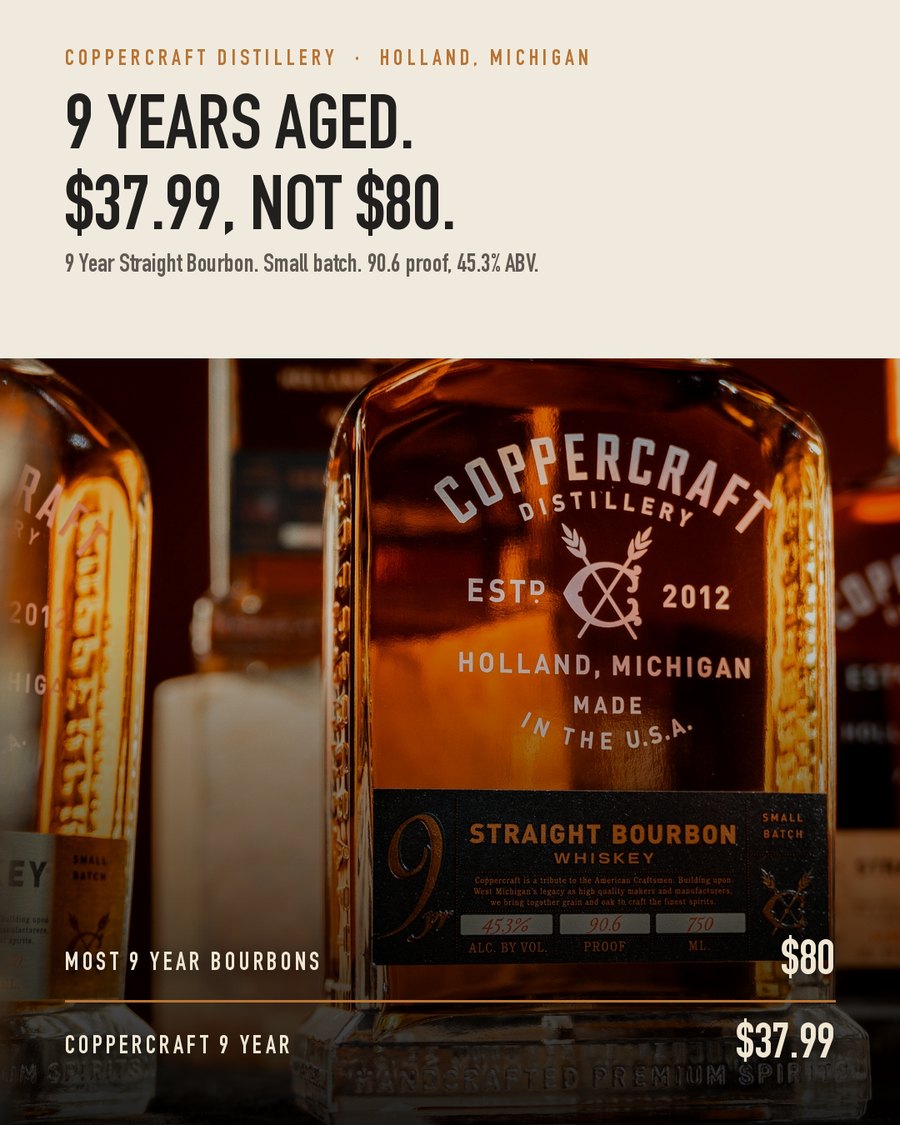
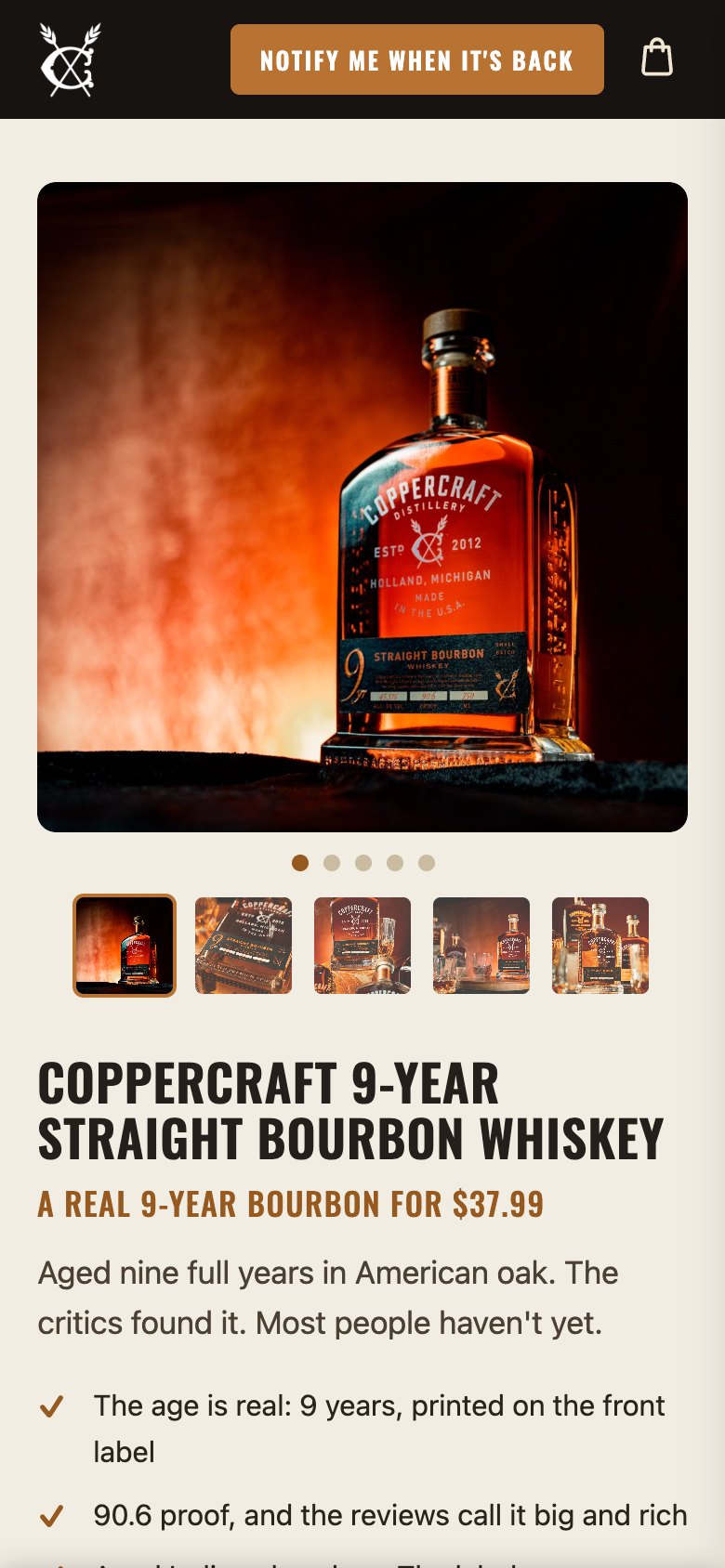
Its nine-year straight bourbon offered a distinctive proposition: an age-stated whiskey priced at $37.99, considerably below the roughly $80 price used as a comparison in the campaign.
But translating that product proposition into online customer acquisition presented several obstacles.
- 01Alcohol advertising restrictions meant Coppercraft could not rely on a conventional Meta product-catalog setup. Campaigns had to account for age restrictions, permitted shipping states and compliant creative claims.
- 02Purchases were completed through a licensed third-party checkout on another domain, creating a measurement problem. Without appropriate tracking, advertising platforms could struggle to associate completed purchases with the campaigns that generated them.
- 03Coppercraft needed accountable acquisition performance, not simply impressions, engagement or website traffic.
The challenge wasn't just attracting attention. It was creating a reliable path from product discovery to completed purchase, with enough visibility to improve performance.
What Echelon did
We rebuilt the buying journey before scaling the advertising.
Rather than treating advertising as an isolated activity, the work focused on the entire acquisition journey: what customers saw, why they should care, how they could purchase and whether the resulting sale could be measured.
01
Landing pages built around the product
We developed dedicated cold-traffic landing pages for individual bottles. The pages brought the information buyers need forward: product age, proof, relevant awards, age restrictions and shipping eligibility. Each page connected visitors to the licensed checkout, while sold-out products directed interested customers to a restock list.
02
Purchase tracking across domains
We implemented purchase-event tracking through the third-party checkout journey, so completed orders could be reported back to Meta. This gave us a clearer basis for evaluating acquisition cost and campaign performance.
03
Creative testing around buying motivations
We tested approximately 15 advertising concepts across the product range. The strongest reported angle focused on the nine-year bourbon: nine years of ageing at $37.99, compared with an approximately $80 reference price. The wider test explored age statements, price comparisons, awards, product quality, curiosity and community-style formats.
04
Performance-led optimisation
We reviewed campaign performance regularly and concentrated spend behind the stronger-performing concepts. Budget increases were introduced incrementally, while weaker concepts were reduced or stopped. The approach prioritised completed purchases and acquisition cost over surface-level engagement.
The creative strategy
Different products. Different reasons to buy.
The creative work wasn't simply about producing more advertisements. It was about understanding which arguments gave customers a compelling reason to consider each bottle.
For the nine-year bourbon, the strongest reported proposition combined age and price.
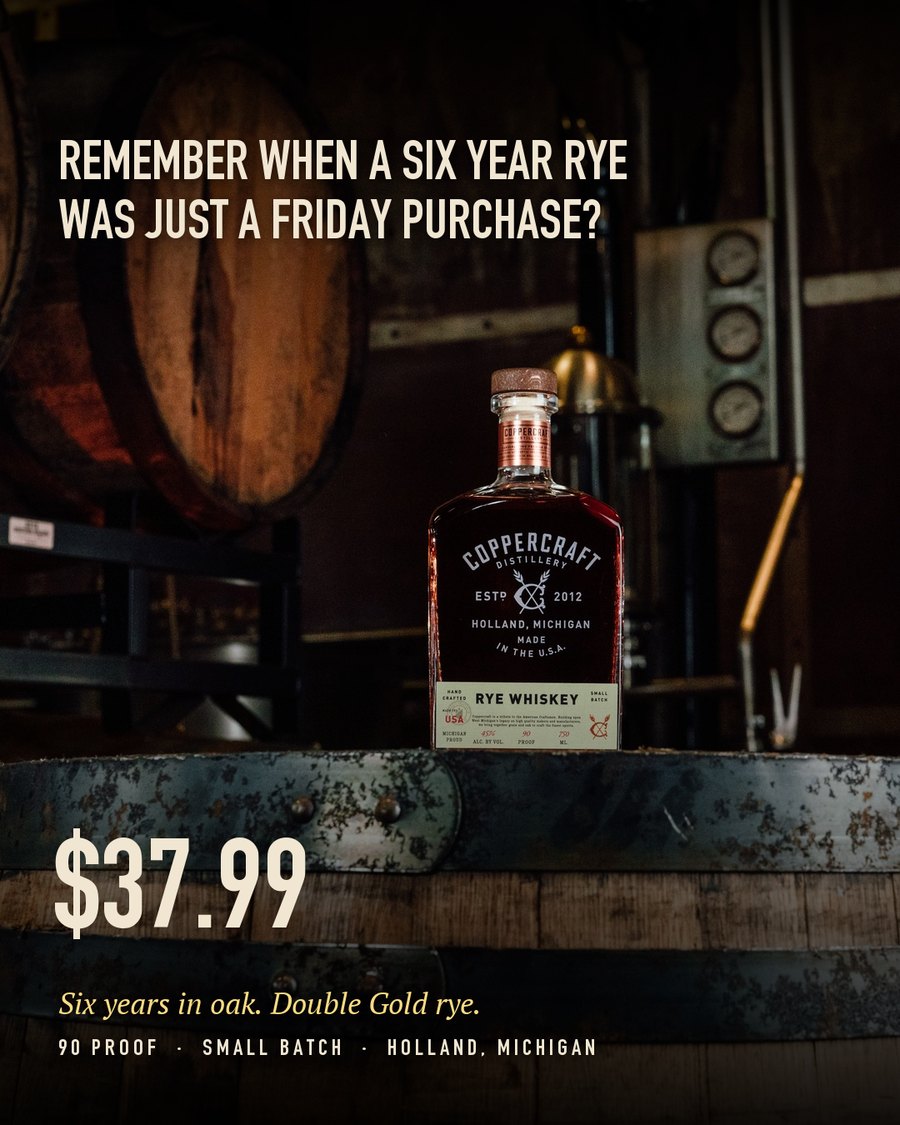
For the rye, the creative explored recognition, awards, product history and affordability.

The results
From a complicated acquisition setup to measurable orders.
Across the lifetime reporting period, Coppercraft's Meta purchase campaigns generated more than 1,000 attributed orders at an average reported cost of approximately $18 per order and a 3.3× reported return on ad spend.
Performance breakdown
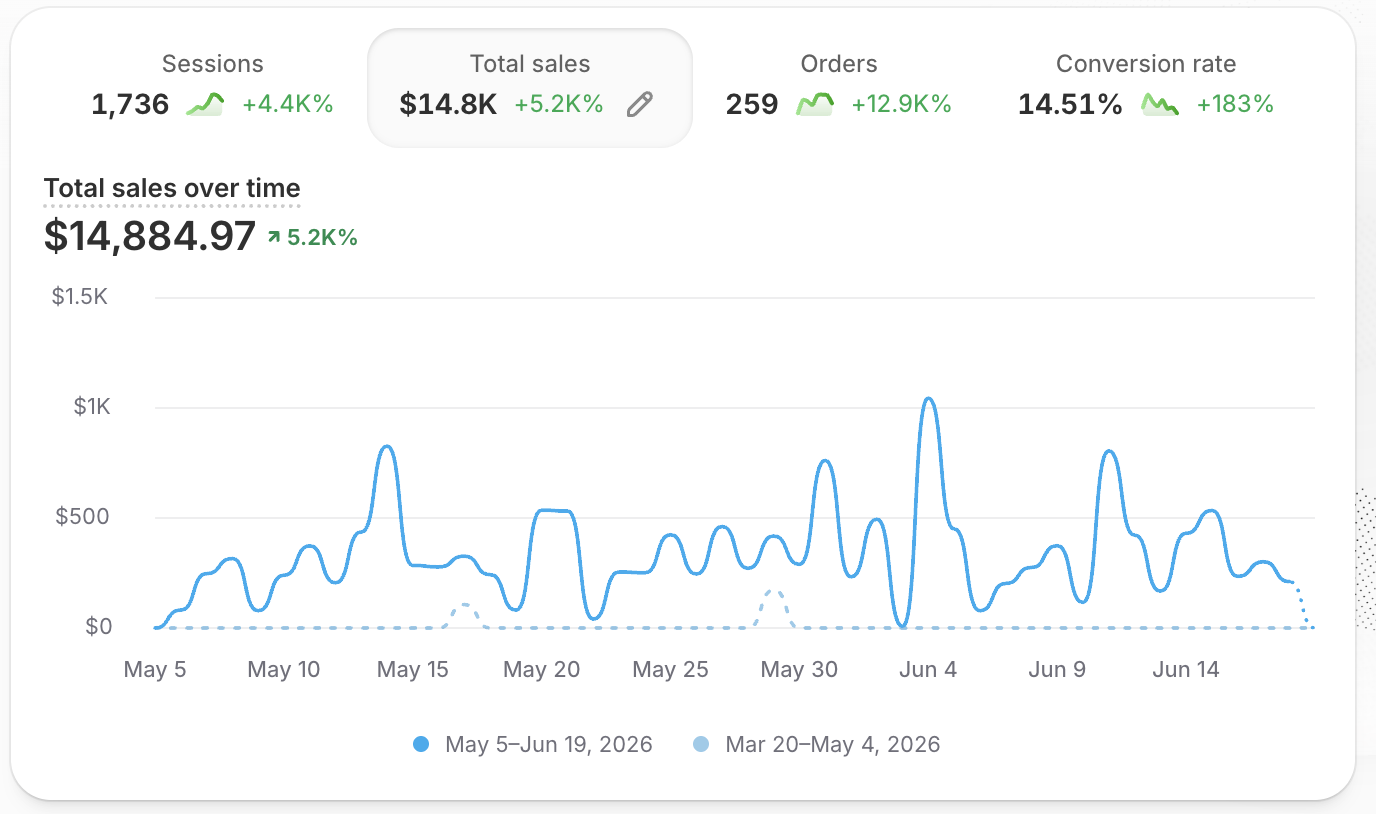
First six weeks: Shopify
5 May to 19 June 2026
- Total store sales$14,884.97
- Orders259
- Reported store conversion rate14.51%
Meta sales campaign snapshot
Reporting through 19 June 2026
- Attributed website purchases222
- Cost per attributed purchase$16.70
- Advertising spend$3,707.32
Shopify figures are store reporting. They include sales from all sources and should not be read as entirely generated by Meta advertising.
What didn't work
Not every test deserved more budget.
Retargeting was less efficient than cold acquisition.
The initial retargeting setup produced a higher cost per purchase than the main sales campaign. In the June reporting snapshot, retargeting recorded 16 attributed purchases at $28.01 per purchase, compared with $16.70 for the main sales campaign. The retargeting approach was subsequently reviewed and restructured.
A winning message wasn't automatically transferable.
The nine-year bourbon's value proposition did not produce the same results when applied directly to another bottle. Different products require different buying arguments. A creative strategy needs to reflect the customer's reasons for choosing that specific product, rather than copying whichever advertisement performed best before.
Evidence and execution
The work behind the numbers.

The takeaway
Growth comes from making the right things work together.
Coppercraft illustrates why customer acquisition is rarely just an advertising problem.
The product already had a compelling story. The opportunity was to communicate that value clearly, remove friction from the buying journey, measure completed purchases and concentrate resources on the messages customers responded to.
The result was a more accountable acquisition system built around what people actually bought, rather than what attracted the most attention.